Picking out home Pilates equipment for folks around the globe isn't just about comparing prices or looking at shiny product pictures. It’s really about digging into evidence, doing some practical testing, and understanding the different spaces people have at home, their bodies, and their shopping habits. You know, what works in one place might not fit in another!
So, here’s some interesting info: the Global Wellness Institute reported that the worldwide wellness industry hit around $6.3 trillion in 2023. And their 2024 Wellness Monitor suggests it’ll keep growing pretty steadily through 2028. This broader trend means more people are probably looking for Pilates gear they can use in their personal space. But hey, just because wellness spending is up doesn’t automatically mean everyone’s buying equipment. That's an important difference. According to Grand View Research, the Pilates equipment market is growing steadily, but they note that what counts as “Pilates gear” can be pretty different—some focus on reformers, some on accessories, some on studio setups, others on home units. So, don’t just swallow any big headline figures without checking how the data was gathered!
Honestly, the best place to start is by measuring your space, thinking about what kind of experience you want, and how much maintenance you’re okay with. For example, a reformer might look pretty small online, but in a tiny apartment, its carriage travel and storage needs could take up more space than you'd expect. On the other hand, a mat, resistance ring, or bands might be a smarter choice if you're just starting out. Check out Pilates Equipment At Home—it should feel stable, adjustable, and something you can stick with regularly. Be sure to peek at the frame materials, spring resistance, weight limits, warranty details, availability of replacement parts, and how tricky assembly might be. While ISO standards can help ensure quality, always double-check certification claims—they’re not always what they seem.
And honestly, no report can beat real-world use. The most reliable insights come from testing products yourself or having trusted distributors do it. They should note issues like product failures, noise, packaging damage, or delays in delivery. A study from McKinsey & Company found that wellness buyers today really care about effectiveness, trust, and convenience. That’s a good yardstick, but not the whole story—we know expectations can vary.
This guide is meant to help you, whether you’re shopping from anywhere around the world, to find the right home Pilates gear. Keep in mind that things like shipping costs, safety standards, and your living space can all influence your final decision. Happy Pilates hunting!
Define Your Home Pilates Goals and Training Space
How to Choose Home Pilates Equipment for Global Buyers?
Define Your Home Pilates Goals and Training Space
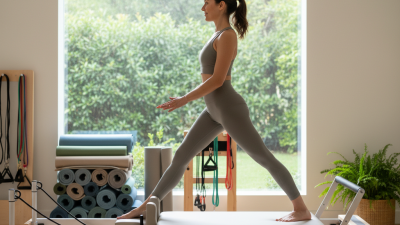
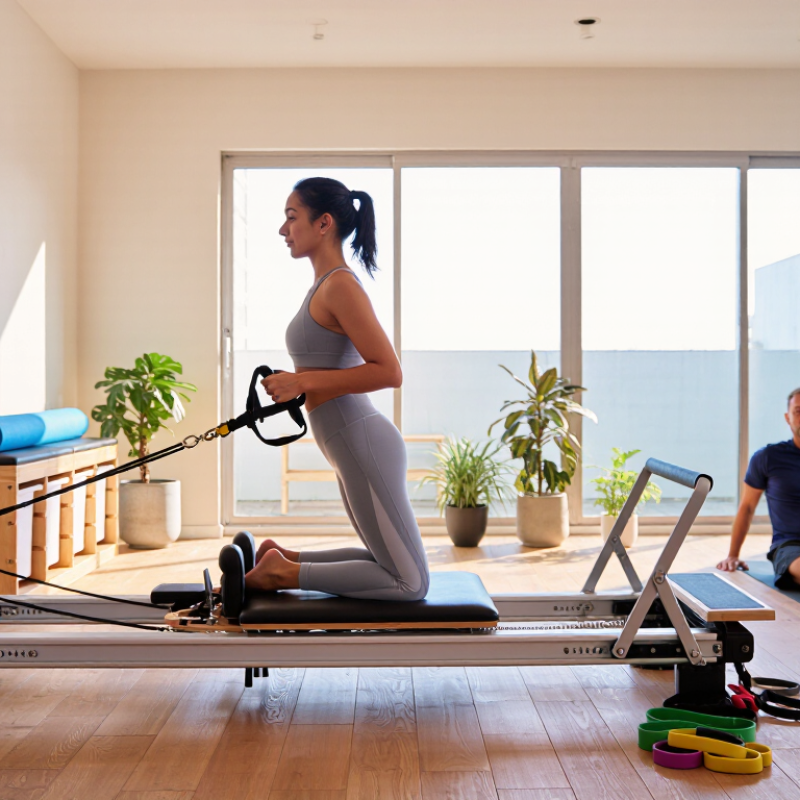
Start with your body, not the catalogue. Are you improving posture, rebuilding core strength, or supporting rehabilitation? A beginner may need only a stable mat, resistance bands, and a small Pilates ball. Advanced users might require a reformer, but it needs more room and careful setup. Measure the training area first. A 2-metre mat can quickly meet a sofa, wall, or coffee table.
Space changes the safest choice. Leave clear movement zones around springs, straps, and sliding parts. Check ceiling height before selecting equipment for standing exercises. In apartments, softer surfaces can reduce noise and protect flooring. I once overestimated available space. The equipment became storage, not training. That mistake still matters.
Industry data supports this home-focused shift. The Global Wellness Institute reported that the physical activity economy reached about 1.1 trillion dollars in 2022. Meanwhile, ACSM’s 2024 Worldwide Survey placed mobile exercise applications among leading fitness trends. For global buyers, Pilates At Home Equipment should match local living conditions, not online images. Consider humidity, delivery access, user height, maintenance skills, and available instructions. A compact, adjustable design may deliver more value than a larger machine. Recheck your goals after four weeks. Your first choice may need revision.
How to Choose Home Pilates Equipment for Global Buyers? - Define Your Home Pilates Goals and Training Space
| Training Goal |
Recommended Equipment |
Typical Equipment Size |
Minimum Clear Training Area |
Suitable User Level |
Space Requirement |
Key Buying Considerations |
| Basic flexibility and posture |
Pilates mat, small ball, resistance band |
Mat: about 180–190 × 60–70 cm
Ball: about 20–26 cm diameter |
About 2.4 × 1.8 m |
Beginner to advanced |
Low; can be stored in a closet or under a bed |
Choose a non-slip, cushioned mat; check the band resistance and ball inflation method. |
| Core control and balance |
Mat, Pilates ring, small ball, foam roller |
Ring: about 33–40 cm diameter
Roller: about 60–90 cm long |
About 2.5 × 2.0 m |
Beginner to intermediate |
Low; accessories are easy to move and store |
Look for comfortable handles, moderate ring flexibility, and a roller with a firm but not excessively hard surface. |
| Strength and lower-body training |
Mat, ankle weights, resistance tubes, Pilates ring |
Ankle weights: commonly 0.5–2 kg per pair
Tube length: about 1.2–1.5 m |
About 2.5 × 2.0 m |
Intermediate to advanced |
Low; keep weights and tubes away from heat and direct sunlight |
Select adjustable or clearly marked resistance levels and secure attachment points without sharp edges. |
| Assisted mobility and recovery |
Mat, foam roller, massage ball, support cushion |
Massage ball: about 6–10 cm diameter
Support cushion: commonly 30–60 cm long |
About 2.2 × 1.8 m |
All levels |
Low; suitable for bedrooms and compact apartments |
Prioritize stable support, washable covers, moderate firmness, and materials that do not develop strong odors. |
| Full-body resistance training |
Home Pilates reformer |
Commonly about 230–250 cm long × 60–75 cm wide
Some models fold vertically |
About 3.0 × 2.5 m, including movement clearance |
Intermediate to advanced; beginners need instruction |
High; verify floor loading, storage route, and assembly access |
Check carriage travel, spring settings, rope adjustment, noise level, maximum user weight, and warranty support. |
| Professional-style home practice |
Reformer with tower or half-trapeze accessories |
Base commonly about 230–250 cm long × 60–75 cm wide
Height may reach about 200–230 cm |
About 3.2 × 2.8 m |
Intermediate to advanced |
Very high; allow overhead clearance and safe access on both sides |
Measure ceiling height, doorway width, elevator dimensions, anchoring needs, and whether installation requires professional assembly. |
| Portable training for frequent movers |
Foldable mat, mini bands, ring, compact sliders |
Folded accessories generally fit within a 60–70 cm storage space
Mat thickness commonly 6–15 mm |
About 2.2 × 1.6 m |
Beginner to intermediate |
Very low; suitable for temporary or shared spaces |
Consider total packed weight, carry handles, moisture resistance, cleaning requirements, and storage temperature. |
| Shared household use |
Mat set with adjustable bands, ring, ball, and blocks |
Adjustable band sets typically include light, medium, and firm resistance
Blocks: about 23 × 15 × 7.5 cm each |
About 2.6 × 2.0 m |
All levels |
Low to medium; accessories can be rearranged for different users |
Choose multiple resistance options, easy-clean surfaces, rounded edges, and user instructions in the required language. |
Space-planning note: Measure the full usable area rather than the empty floor area. Leave enough clearance for arms, legs, carriage movement, safe mounting, and access around the equipment. Always follow the product’s assembly, weight, ceiling-height, and safety specifications.
Compare Essential Pilates Equipment by Function
Choosing Home Pilates Equipment starts with function, not appearance. A thick, non-slip mat supports floor exercises and protects joints on hard surfaces. It is usually the most practical choice for beginners, renters, and smaller homes. Resistance bands add adjustable tension without requiring much storage. A Pilates ring can strengthen the inner thighs, arms, and chest during controlled movements. A small exercise ball helps improve balance and spinal awareness.
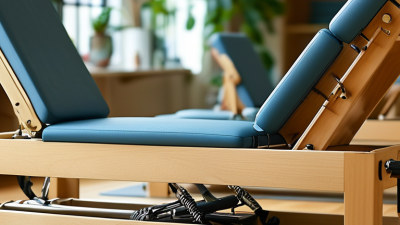
Space matters. A reformer provides smoother resistance and more exercise variety, but it requires stable flooring and enough clearance. Its moving carriage also demands careful setup and regular inspection. A Pilates chair offers compact resistance training, especially for legs and core muscles. However, its smaller base may feel less forgiving for inexperienced users. I once underestimated the storage space needed for a reformer. That choice was not ideal. Measure the training area before ordering.
Global buyers should compare material quality, load capacity, user height range, and replacement-part availability. Look for clear assembly instructions and tested safety information. Handles should feel secure, while straps and springs should show no fraying or rust. Product dimensions should be listed in consistent units, with shipping weight included. Consider climate too. Humid rooms can shorten the life of untreated metal and foam. A reputable seller should provide responsive support and accurate specifications, although online descriptions are not always perfect. Keep it simple. Choose equipment that matches your routine, floor space, and actual training experience.
How to Choose Home Pilates Equipment for Global Buyers?
Compare essential Pilates equipment by primary function and typical floor footprint.
Smaller equipment such as mats and Pilates chairs is suitable for mobility, core training, and space-conscious home studios. Reformers and Cadillac tables support a broader range of resistance and movement exercises but require more floor space. Dimensions are representative international equipment sizes; actual measurements vary by design and supplier.
Check Materials, Safety Features, and Product Durability
When choosing home Pilates equipment for global use, inspect the materials before the appearance. A steel frame should feel stable, with smooth welds and protective coating. Aluminum can reduce weight, but thin sections may flex during repeated movement. Check padding density, stitching, and surface texture. Foam should recover after pressure, not remain permanently crushed. For humid regions, moisture-resistant finishes can slow corrosion. For dry climates, rubber may harden faster than expected. Materials matter every day.
Tips:
Ask for material specifications, load tests, and care instructions. Request close-up photos of joints, springs, straps, and adjustment points. Confirm whether replacement parts are available locally. Look for clear safety guidance and warnings in understandable language. If documentation feels vague, pause before ordering. I once trusted a polished product image too quickly, and the frame details were impossible to verify.
Safety features
should support controlled movement, not merely look impressive. Non-slip feet need firm contact with the floor, especially on tile or polished wood. Adjustable parts should lock securely and resist accidental release. Springs must return smoothly without scraping or sudden tension changes. Durability also depends on storage and cleaning habits. Even strong equipment can degrade when left beside a window or stored while damp. Buyers should compare test evidence with real household conditions. A longer warranty helps, but it cannot replace careful inspection.
Review Global Shipping, Certifications, Pricing, and After-Sales Support
How to Choose Home Pilates Equipment for Global Buyers?
Global buyers should examine shipping before comparing equipment prices.
UNCTAD’s Review of Maritime Transport 2023 states that over 80% of global merchandise trade moves by sea. Large reformers may therefore face port delays, seasonal surcharges, and complicated customs clearance. Ask for the packed dimensions, gross weight, delivery term, and damage procedure. A low factory price can become expensive after freight, duties, local taxes, and assembly.
Certifications also require careful checking.
Ask whether the equipment follows relevant safety standards, such as ISO 20957 principles for stationary training equipment. Electrical accessories may need separate conformity documents in the destination market. Do not accept a certificate photograph without verifying its issuer, scope, and expiry date. Pricing should include replacement straps, springs, packaging, and possible technician visits. The Global Wellness Institute valued the wellness economy at $5.6 trillion in 2022, showing strong demand, but demand does not guarantee quality. Some sellers still describe basic testing as full certification. That wording deserves skepticism.
Tips:
Request a landed-cost quotation in writing. Confirm delivery time to your exact postal code. Check whether spare wheels, ropes, and upholstery are available locally. Read the warranty exclusions, especially for rust, misuse, and transport damage. A responsive service team should provide assembly instructions and video support. Keep every document. It may feel excessive, but it can prevent weeks of argument. Even experienced buyers sometimes overlook return freight, which is the uncomfortable detail.
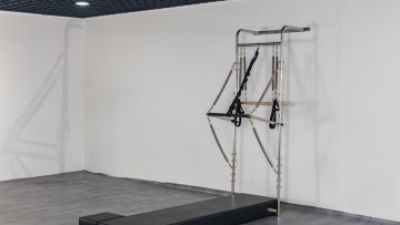
Pilates Wall Tower: What GWI’s 2024 Wellness Economy Report and ACSM’s 2025 Worldwide Survey of Fitness Trends Reveal
Recent insights from the 2024 wellness economy report and the 2025 worldwide survey of fitness trends point to a stronger demand for exercise solutions that support both physical performance and overall well-being. Consumers are increasingly interested in mindful movement, functional strength, flexibility, posture, and personalized training rather than one-dimensional workouts. This shift has made Pilates especially relevant, as it combines controlled resistance, core stability, mobility, and body awareness in a low-impact format.
The Pilates Wall Tower LM037 is designed to meet these evolving needs in studios, wellness spaces, and carefully planned home gyms. Its reinforced wooden structure provides dependable support for a broad range of Pilates exercises, while the special leather cover offers a refined, durable surface. High-density EVA filling improves comfort during seated, kneeling, and reclining movements, helping users maintain concentration throughout each session. The non-slip construction and eco-friendly materials further support a secure and responsible training environment.
As fitness continues moving toward adaptable, experience-focused equipment, a wall tower can help create more varied sessions within a compact footprint. Users can work on controlled resistance, balance, spinal alignment, stretching, and progressive strength while maintaining a smooth connection between movement and breath. The LM037 suits instructors and individuals seeking comfortable, resilient equipment that reflects the growing preference for holistic, practical, and sustainable wellness routines.
Conclusion
Choosing Home Pilates Equipment starts with identifying your fitness goals, available training space, and preferred workout style. Buyers should compare equipment by function, considering whether they need support for core training, flexibility, strength, or rehabilitation. It is also important to select designs that accommodate different body types and skill levels, with adjustable settings that allow users to progress safely and comfortably.
Before purchasing, evaluate frame stability, material quality, padding, weight limits, and safety features to ensure long-term durability. Portability and storage should match the size and layout of the home, especially for users with limited space. Global buyers should also review shipping options, product certifications, warranty terms, pricing transparency, replacement parts, and after-sales support. A thoughtful comparison of these factors can help users choose reliable equipment that fits their lifestyle, supports consistent training, and delivers good value over time.



 1Durch die gruppenweite Einführung und Harmonisierung unseres integrierten Managementsystems (IMS) werden alle bestehenden Unternehmens-, Qualitäts-, Umwelt- und Energiepolitiken durch diese Unternehmenspolitik ersetzt. Der Slogan „Textil hat Zukunft – auch in De