Leave Your Message
0%

Picking out the right Reformer isn’t just about shiny pictures or sleek marketing images — it really starts with understanding your body, the space you have, and what you’re looking to get out of your training. If you're working out at home, chances are you'd prefer something compact, with quiet wheels, and easy spring adjustments without much hassle. On the other hand, if you're running a studio, durability becomes key — you’ll want a machine that can handle heavy daily use, with adjustable footbars, replaceable upholstery, and support for instructors when needed. Those little details matter a lot. A carriage that glides smoothly today might start making noise after months of regular use, so it’s worth thinking about longevity right from the start.

Industry trends really back this up. For example, ClassPass’s 2023 Look Back report named Pilates the most popular workout worldwide for the second year in a row. That shows how much interest there’s growing in Reformer Pilates. But being popular doesn’t automatically mean it’s the right fit for everyone. Market reports from places like Grand View Research also show that the Pilates equipment scene is expanding—more machines, more studio options. Still, just because something costs a lot doesn’t mean it’s better quality or will give you a superior workout. Sometimes, the higher price tag is just marketing hype.

Joseph Pilates himself famously said, 'The Pilates Method teaches you to be in control of your body and not at its mercy.' That’s a good rule of thumb when shopping. Make sure to test out the carriage glide, spring resistance, footbar positions, shoulder rests, and the maximum weight it can handle. Don’t forget to check what kind of warranty and replacement policies come with it. Brands like Balanced Body and Merrithew offer solid options, but keep in mind, even the most trusted equipment might not work perfectly in your space or match your teaching style.

Honestly, there’s no such thing as a perfect Reformer. Instead, the best one strikes a balance — it’s safe, adjustable, easy to maintain, and feels good to use. Before you buy, measure your doorways, try out different spring settings, and listen for any squeaks or friction. And above all, think about what you really need — don’t just go for the most eye-catching or expensive machine out there. It’s about finding the right fit for you.

How to Choose the Best Pilates Reformer?

Define Your Pilates Reformer Goals and Intended Users

Choosing the best Pilates reformer starts with a clear purpose, not an attractive frame or a long accessory list. Define your Pilates reformer goals before comparing models. Do you want better posture, stronger core control, athletic conditioning, or gentle movement after an injury? A beginner may need stable resistance and simple adjustments. An experienced practitioner may prefer finer spring control and a wider movement range. For rehabilitation, ask a qualified physiotherapist or instructor to review your needs.

Think about every intended user. A home reformer for one adult can be compact and personally adjusted. A shared household model needs quick changes, clear markings, and a carriage that suits different heights. Taller users should check shoulder-rest spacing and footbar positions.

For teaching, smooth transitions matter because repeated setup delays can disrupt a class. Weight limits also deserve attention, especially when users perform kneeling or jumping exercises.

Test the reformer if possible. Notice whether the carriage rolls quietly and stops without jolting. Check the straps, springs, footbar, and locking points with your hands. I once focused too much on padding and overlooked awkward spring changes. That mistake taught me to value daily usability over showroom appearance. Read maintenance instructions and independent safety information, then measure your floor space, ceiling clearance, and storage area.

A reformer that fits your goals but blocks a doorway is not a practical choice.

Compare Reformer Types, Sizes, and Available Features

Choosing the best Pilates reformer starts with comparing its type, dimensions, and practical features. A studio reformer suits frequent training and offers longer carriage travel. A compact model fits smaller rooms but may limit stride length. Folding versions save space, though their frames can feel less stable during stronger movements. Measure your room first. Leave clear space around the footbar and carriage.

Size should match the user, not only the room. Taller users often need a longer frame and adjustable shoulder rests. Shorter users may prefer closer spring positions and a lower platform. Check the carriage width, padding, rope adjustment, and footbar angles. Useful extras include a tower, jumpboard, box, and additional spring settings. More features are not automatically better. I once assumed a heavier frame always meant superior control. That was too simple. Frame balance and smooth wheels matter more during slow exercises.

Industry data supports careful equipment selection. The Global Wellness Institute’s Global Wellness Economy Monitor 2024 valued the wellness economy at 6.3 trillion dollars in 2023. It projects nearly 9 trillion dollars by 2028. Meanwhile, the 2024 Global Report from the International Health, Racquet & Sportsclub Association recorded about 184 million health-club members worldwide. These figures suggest growing demand, but they do not prove every reformer suits every user. Ask whether replacement parts, maintenance guidance, and professional setup support are available. Test the carriage quietly. Small differences become obvious after repeated sessions.

How to Choose the Best Pilates Reformer? — Compare Reformer Types, Sizes, and Available Features

Comparison Factor Compact or Folding Reformer Standard Studio Reformer Tower Reformer Clinical or Cadillac-Style Reformer
Best For Small homes, apartments, and users who need storage flexibility Regular home workouts, instructors, and general studio use Users who want a wider range of spring-based exercises Rehabilitation, supervised training, and advanced movement work
Typical Overall Length Approximately 210–235 cm Approximately 235–260 cm Approximately 235–270 cm Approximately 250–300 cm, depending on the frame and attachments
Typical Overall Width Approximately 55–70 cm Approximately 65–75 cm Approximately 65–80 cm Approximately 75–100 cm
Recommended Room Clearance Allow about 60 cm on each side and 90 cm at each end Allow about 60–90 cm on each side and 90 cm at each end Allow about 75–90 cm on each side and 90–120 cm at each end Allow at least 90 cm around the equipment for safe access and attachments
Storage Often foldable or vertically storable Usually remains assembled Some models fold, but tower clearance is required Generally fixed and designed for permanent installation
Frame Stability Good when properly weighted and placed on a level floor Very good for repeated home or studio use Very good, with additional height from the tower structure Excellent when professionally installed and used in a dedicated space
Carriage Travel Often shorter than a studio model; check user height compatibility Typically offers a longer travel range for full-body exercises Typically similar to a standard reformer, depending on the frame Usually long travel, with adjustment options for clinical applications
Spring System Usually 3–5 springs with several resistance levels Usually 4–5 springs with varied resistance levels Reformer springs plus tower springs for additional exercise options Multiple spring positions and attachment points for highly adjustable resistance
Adjustable Footbar Common; usually has 2–4 positions Common; often includes several height settings Common; should be adjustable for different body sizes Highly adjustable; may include removable or split sections
Shoulder Rest Adjustment Common on better-equipped models Usually removable or adjustable Usually removable or adjustable Typically adjustable for positioning and clinical needs
Rope and Pulley System May be included; inspect the adjustment range Usually included Included with additional tower attachment points Usually includes extensive rope, pulley, and attachment options
Tower or Half-Tower Not normally included Available on some configurations Integrated tower is the defining feature Often includes a full tower or Cadillac frame
Height from Floor Often approximately 25–40 cm Often approximately 35–45 cm Often approximately 35–50 cm, excluding tower height Varies widely; raised frames can improve access for some users
Weight Capacity Commonly around 110–150 kg; verify the manufacturer’s specification Commonly around 130–160 kg; verify the manufacturer’s specification Commonly around 130–160 kg; tower attachments may have separate limits Varies by configuration; confirm both frame and attachment limits
Noise and Smoothness Can be smooth, but compact rails and lighter frames may transmit more vibration Usually smooth and quiet when rails, wheels, and springs are maintained Usually smooth, with additional noise possible from tower attachments Designed for smooth controlled movement; maintenance is important for frequent use
Portability Best portability; some models have wheels or folding hinges May have transport wheels, but is usually heavy Limited portability because of tower height and weight Low portability; intended for a dedicated training area
Assembly Requirements Usually moderate; folding mechanisms need careful setup Usually moderate; rail alignment and rope setup should be checked More involved because the tower must be securely assembled Often extensive; professional installation may be advisable
Suitable User Height Best for users who fit the shorter carriage travel; check the maximum recommended height Suitable for most users when carriage travel and footbar positions are adjustable Suitable for most users; tower height and carriage travel must both be considered Highly adaptable when multiple adjustment points are available
Maintenance Needs Clean rails and inspect hinges, wheels, ropes, and springs regularly Inspect wheels, rails, ropes, springs, and fasteners regularly Maintain both reformer components and tower springs or straps Requires regular inspection of all springs, pulleys, bars, ropes, and frame connections
Main Advantage Space efficiency and convenient storage Balanced performance, stability, and versatility More exercise variety without the footprint of a full Cadillac Maximum adjustability for advanced training and supervised applications
Main Limitation Shorter travel and lighter construction may limit exercise range or stability Requires a permanent, relatively spacious workout area Needs additional vertical clearance and more assembly space Large footprint, higher complexity, and greater installation demands
Selection Priority Choose based on folded dimensions, carriage travel, stability, and storage method Choose based on frame quality, smooth carriage movement, adjustability, and comfort Choose based on tower height, attachment layout, spring adjustment, and room clearance Choose based on supervision needs, adjustability, accessibility, installation, and safety

Measurements and weight capacities are typical ranges rather than universal specifications. Always confirm the exact dimensions, maximum user weight, required clearance, and installation instructions for the specific reformer configuration before purchase.

Evaluate Frame Quality, Stability, and Weight Capacity

Choosing the best Pilates reformer starts with frame quality, not appearance. During equipment checks, I press gently against the frame and observe movement. A rigid steel or hardwood frame should remain quiet under controlled pressure. Examine every joint, weld, and connection point closely. Loose bolts can become distracting during slow exercises. They may also affect alignment over time.

Stability depends on more than a heavy base. A well-balanced frame should stay grounded when the carriage moves quickly. Check the feet, floor clearance, and overall width. Test the reformer on a firm, level surface. It should not rock when you kneel, stand, or change spring resistance. Weight capacity requires careful reading. Confirm whether the stated limit includes the user, accessories, and moving force. Never rely only on a large number in an advertisement. Ask for documented testing or clear manufacturer specifications.

Before buying a Pilated Reformer, perform several realistic movements. Sit on the carriage, press through the footbar, and listen for unusual sounds. Check whether the carriage remains smooth near its full travel. I once focused too much on padding and overlooked a slight frame wobble. That was a useful mistake. Comfort matters, but structural confidence matters more. A reformer should support steady practice without making you think about the equipment every minute. Surface finishes can look impressive, yet they do not replace dependable construction.

How to Choose the Best Pilates Reformer?

Evaluate frame quality, stability, and weight capacity using representative equipment specifications.

Larger frame mass and a wider base generally improve stability, while a higher recommended user-load rating indicates greater structural capacity. Compact reformers are suitable for limited spaces, whereas full-size and studio-grade designs typically provide stronger support for frequent or intensive use. These are representative reference values rather than a universal industry standard, so always verify the manufacturer’s tested specifications before purchasing.

Check Adjustability, Comfort, and User Safety

Choosing a Pilates Reformer begins with fit, not appearance. A polished frame cannot fix poor adjustment. Test the carriage, shoulder rests, footbar, and spring settings before buying. The footbar should move smoothly and lock firmly. Different body heights need different positions. Your knees should bend naturally without pressing against your chest. A clear adjustment scale helps repeat a safe setup. Small detail, big difference. I prefer equipment that changes easily, without force or confusing instructions. Still, I once underestimated the value of a wide carriage. That mistake made side-lying exercises feel unstable.

Comfort affects control, especially during slow, repeated movements. Check the padding with your hands and knees, not only through clothing. It should feel supportive, not soft enough to swallow your posture. Handles, straps, and loops need clean stitching and secure connections. Inspect every clip. A Pilates Reformer should remain steady when you push through the footbar. Rubber feet should grip the floor and reduce rocking. Leave enough space around the machine for mounting and dismounting. Safety also depends on maintenance. Springs can fatigue, and worn straps may look harmless at first. Follow the inspection schedule and replace damaged parts promptly. If the frame wobbles, do not simply adapt to it. Ask a qualified instructor to check your setup. My checklist is useful, but not perfect. Body proportions, training level, and injury history can change the right choice. A cautious trial is better than a rushed purchase.

Assess Space Requirements, Storage, and Assembly Needs

Choosing a Pilates reformer starts with the room, not the color or accessories. A typical full-length reformer may require about 240–260 centimeters of length and 65–75 centimeters of width. Leave at least 60 centimeters beside each side for safe movement. Add more space at the head and foot ends for mounting, stretching, and cleaning.

Measure doorways, stair turns, and ceiling height before ordering. A machine that fits the room may still fail at delivery. Foldable models save floor area, but their storage position needs a stable wall or dedicated cabinet. Never lean heavy equipment loosely against furniture. It can shift. That detail is easy to overlook.

The 2024 Global Wellness Economy Monitor valued the global wellness economy at 6.3 trillion dollars in 2023. This growth reflects stronger interest in home-based movement spaces, but bigger demand does not make every room suitable.

Assembly also matters. The American College of Sports Medicine’s 2024 fitness trends survey continued to identify strength and functional training as major priorities, so check whether the reformer supports your broader routine, including Pilates Reformer Abs work. Review the manual, count the parts, and confirm whether two people are needed for lifting. I would avoid rushing this step. A slightly imperfect setup can create noise, poor alignment, or unnecessary strain. Choose a clear storage path, accessible adjustment points, and a surface that stays level during use.

Compare Prices, Warranties, and Long-Term Maintenance Costs

Choosing the best Pilates Reformer Set requires more than comparing the checkout price. The Global Wellness Institute’s 2024 report valued the global physical activity economy at about $1.06 trillion in 2023. This growth attracts more equipment sellers, but quality still varies widely. Compare frame materials, carriage stability, spring replacement prices, and delivery fees. A $1,200 reformer can become a $1,600 purchase after shipping, taxes, and required accessories. Read the fine print.

Warranty length matters, but coverage matters more. Check whether the warranty includes the frame, carriage wheels, ropes, springs, and upholstery. Some warranties cover structural defects for several years but exclude normal wear. That distinction affects ownership costs. The U.S. Bureau of Labor Statistics reports that repair and maintenance prices generally change with labor and material costs, so future servicing should not be ignored. Ask for current prices for replacement springs, wheels, straps, and footbar pads before buying.

A practical comparison uses a five-year ownership estimate: purchase price, shipping, setup, expected replacement parts, and professional servicing. Industry guidance from the Health & Fitness Association emphasizes equipment upkeep as part of safe facility operations, not an optional expense. Home users should inspect ropes and springs monthly, especially when several people share the equipment. My own selection process would leave room for uncertainty; usage frequency and storage conditions can change maintenance needs dramatically. A dry room, protective mat, and gentle cleaning may extend upholstery life, but no forecast is perfect.

Maple Pilates Reformer With Tower: Features, Benefits, and Home Workout Guide

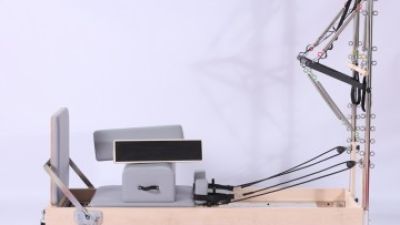
A maple Pilates reformer with tower brings the versatility of studio training into a refined home workout space. Its solid wooden frame offers stability, while the smooth carriage, adjustable footbar, springs, and padded platform support controlled movement. The integrated tower adds vertical resistance options through pulleys, straps, and bars, allowing users to perform a broader range of exercises for the legs, core, shoulders, and spine.

For beginners, start with light spring resistance and basic footwork, focusing on steady breathing, neutral alignment, and slow carriage movement. As confidence improves, the tower can support arm presses, roll-down exercises, assisted stretches, and mobility work. The adjustable settings make it suitable for different heights, fitness levels, and training goals, from gentle flexibility sessions to challenging strength routines.

Place the reformer on a level, uncluttered surface with enough space around the tower and carriage for unrestricted movement. Inspect the springs, ropes, and attachments before each session, and keep the equipment clean and dry. A practical home routine may include warm-up footwork, hip and shoulder mobility, core stabilization, controlled pulling exercises, and a brief cool-down. Regular practice can help improve posture, balance, coordination, flexibility, and full-body strength while maintaining a calm, focused training environment.

FAQS

How should I define my Pilates reformer goals?

Decide whether you want better posture, core control, athletic conditioning, or gentle movement. Your goal matters more than appearance. Rehabilitation needs guidance from a qualified physiotherapist or instructor.

What should beginners look for in a reformer?

Beginners usually benefit from stable resistance and simple adjustments. Clear spring markings can reduce confusion during practice. Keep the setup uncomplicated.

What features help a shared household reformer?

Choose quick adjustments, clear markings, and a carriage supporting different heights. Check shoulder-rest spacing and footbar positions carefully. Small delays become annoying.

How can taller users check whether a reformer fits?

Test the shoulder rests and footbar in several positions. Your body should move without cramped shoulders or overstretched legs. Measure before buying.

What should I test during an equipment inspection?

Sit on the carriage and press through the footbar. Listen for unusual sounds and watch for sudden jolts. Move through the carriage’s full travel.

How important are frame quality and stability?

A rigid frame should stay quiet under controlled pressure. Inspect joints, welds, bolts, and connection points. A slight wobble matters.

How should I evaluate weight capacity?

Confirm whether the stated limit includes the user, accessories, and moving force. Look for documented testing or clear specifications. Do not trust one impressive number.

What space measurements should I take before buying?

Measure floor space, ceiling clearance, doorways, and storage areas. A reformer should not block a doorway. Fit is practical, not glamorous.

Is padding the most important comfort feature?

Padding helps, but dependable construction matters more. I once overlooked awkward spring changes because the padding looked excellent. That was a useful mistake.

How can I judge daily usability?

Check whether the carriage rolls quietly and stops smoothly. Test straps, springs, footbar, and locking points by hand. A beautiful reformer may still feel inconvenient.

Conclusion

Choosing the best Pilates Reformer starts with identifying your goals and the people who will use it. Consider whether you need equipment for gentle home workouts, advanced training, rehabilitation, or shared use. Compare different Reformer designs, dimensions, and features, including resistance options, carriage movement, spring settings, and accessory compatibility. A strong frame, stable base, and suitable weight capacity are essential for consistent performance and confidence during exercise.

Next, evaluate adjustability and comfort by checking the footbar, shoulder rests, straps, carriage padding, and user-position options. Measure your available space carefully, allowing room to exercise safely, and consider whether the Reformer can be folded, stored, or assembled easily. Finally, compare the total cost rather than focusing only on the initial price. Review warranty coverage, replacement parts, cleaning requirements, and long-term maintenance expenses. The right choice should balance functionality, safety, durability, convenience, and overall value for your specific needs.

Ethan

Ethan

Ethan is a dedicated marketing professional with extensive expertise in the fitness and wellness industry, particularly in the realm of pilates and yoga. With a strong commitment to promoting eco-friendly solutions and exceptional craftsmanship, he plays a pivotal role in elevating the presence of......
Previous How to Choose the Best Pilates Machine for Your Business?